
Let’s be honest: cleaning your makeup bag is rarely at the top of your to do list. We diligently wash our faces, double-cleanse to protect our skin barrier, and wash our makeup brushes. But the bag that actually holds all our expensive products? It usually gets ignored at the bottom of a tote or sits on a humid bathroom counter for months.
It might be time to pay attention.
According to research from independent studies, the average makeup bag can carry up to 10,000 types of bacteria. To put that in perspective, that makes your everyday beauty accessory technically dirtier than the average toilet seat.
If you are dealing with random skin irritation, redness, or even frequent eye issues, the culprit might not be your products—it might be your storage. Here is your ultimate guide on how to deep clean your kit, why materials like leather and nylon are harder to keep clean than you think, and how to keep your routine germ-free.
Is it important to clean my makeup bag?
The short answer is: yes.
While we often focus on breakouts, a dirty makeup bag can cause a wide range of skin issues. Your bag is often a breeding ground for harmful bacteria, including E. coli, staph, and fungi.
When you store your brushes, sponges, and products in a dirty bag, they pick up these germs. When you apply your makeup, you transfer that bacteria directly onto your face and eyes. This can disrupt your skin’s balance, leading to:
- General Irritation: Redness or itchiness that doesn't seem to go away.
- Eye Infections: Bacteria transferred from bag to mascara wand can lead to pink eye or styes.
- Contact Dermatitis: Rashes caused by a buildup of old, oxidized product rubbing against your skin.
The problem is compounded by a "biofilm"—a sticky, microscopic layer formed by a combination of old spilled product, dead skin cells (shed from brushes), and moisture. This creates a protective shield for bacteria, making it incredibly difficult to remove.
Why are leather, nylon, and fabric bags hard to keep clean?
Before you start scrubbing, you have to look at what your bag is made of. This is the number one factor in keeping your products clean.
Most standard makeup bags are made from materials that are surprisingly difficult to sanitize: nylon, fabric, or leather.
- Leather: While it feels luxurious, leather is a porous animal hide.1 It absorbs oils and liquids (like a spilled foundation or a leaky serum). Once a liquid soaks into the grain of the leather, it is nearly impossible to remove. You also cannot use bleach or harsh disinfectants on leather without ruining the material.
- Nylon and Fabric: These materials act like sponges. If a powder compact breaks, the dust settles deep into the woven fibers. If a bottle leaks, the liquid spreads instantly. Even if you wipe the surface, the bacteria remains trapped in the weave of the fabric.
- Moisture Retention: All three materials—leather, nylon, and fabric—can hold onto moisture from steamy bathrooms or damp beauty sponges. Bacteria grow fastest in damp environments, turning your bag into a petri dish.2
What is the best type of material for a makeup bag?
To protect your skin and preserve your expensive products, you need a bag that repels bacteria rather than absorbing it.
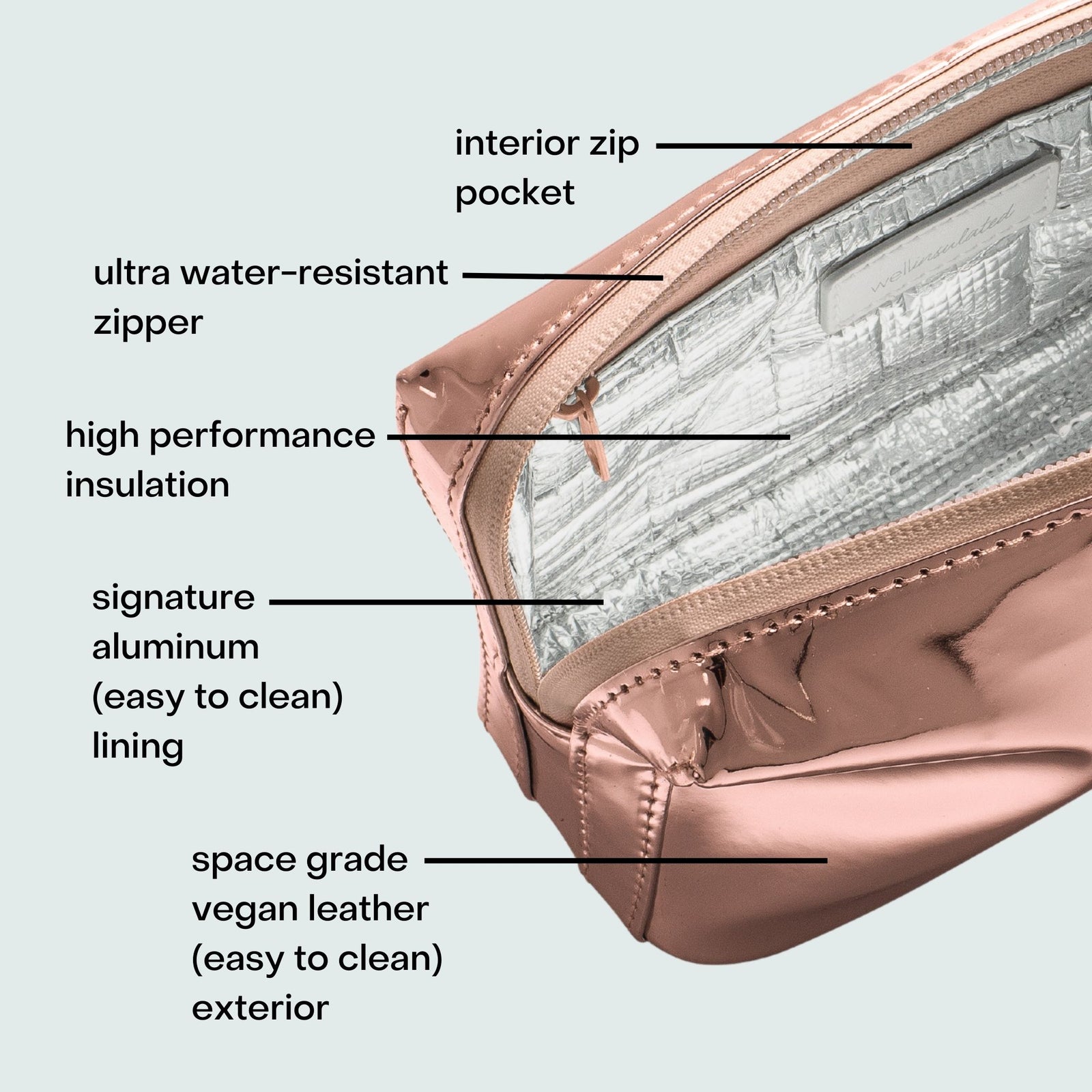
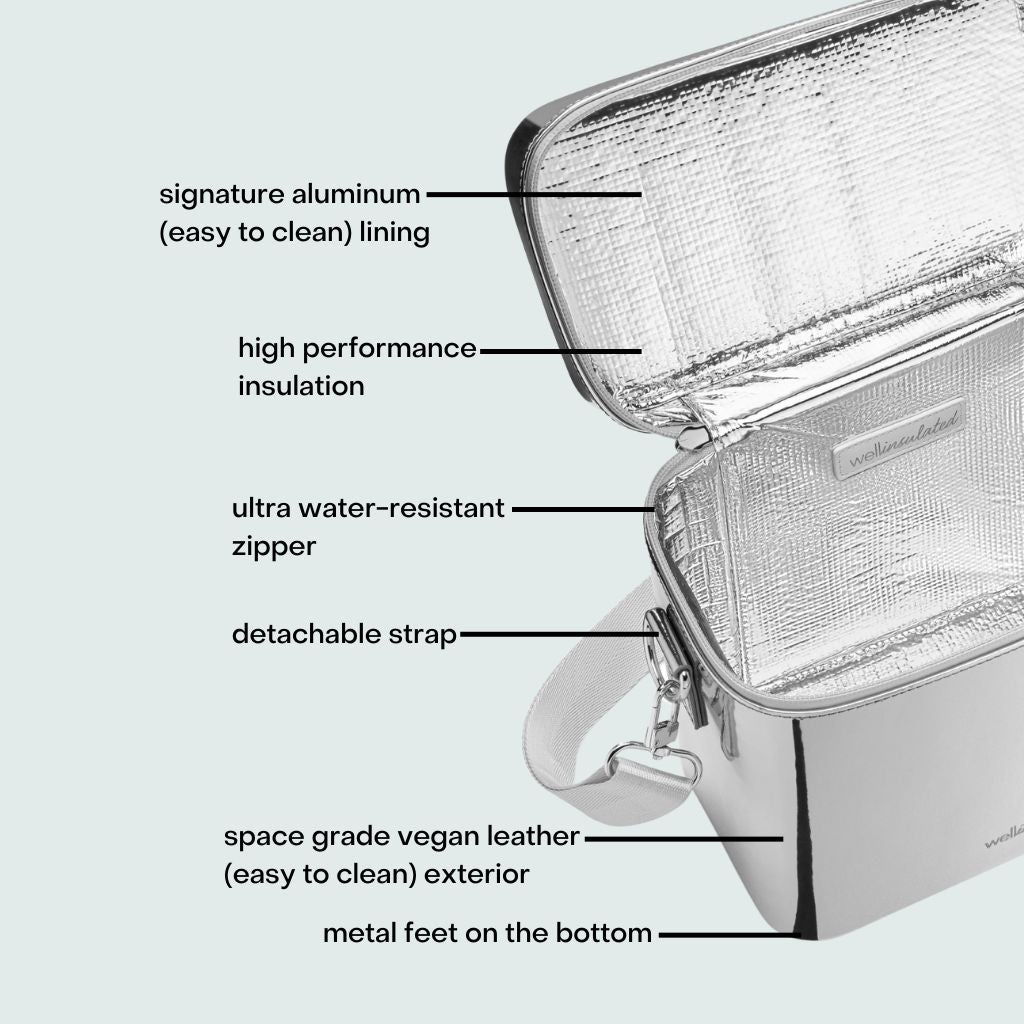
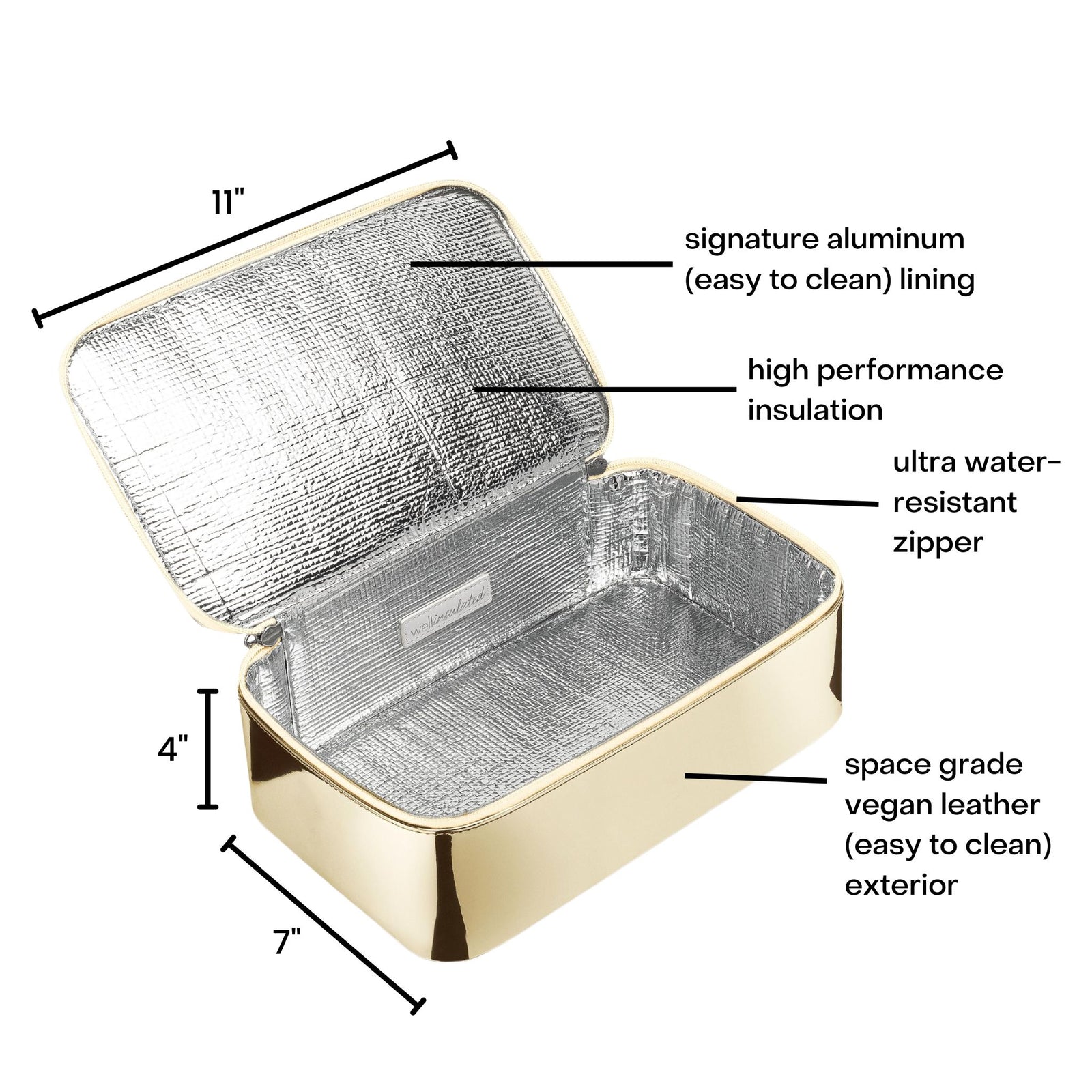
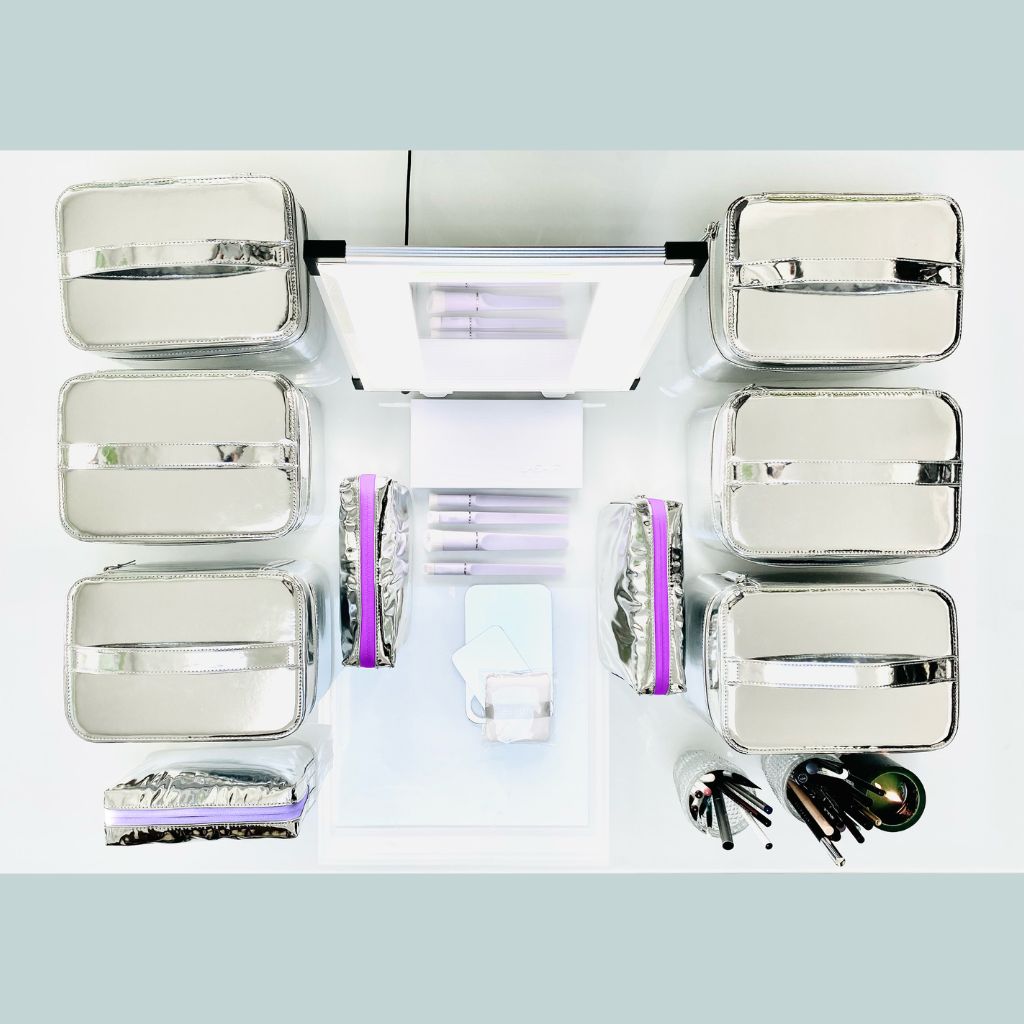
WELLinsulated® bags and cases are designed specifically to solve this problem. We use a high-tech aluminum lining and a Mylar-coated vegan leather exterior.
Why it works: These are non-porous materials. Unlike real leather or woven nylon, bacteria cannot latch onto or penetrate the material.
The Benefit: Instead of absorbing spills, the liquid sits on the surface of the aluminum liner. This allows you to wipe it away instantly with a damp cloth.
SHOP OUR WIPE-CLEAN BEAUTY BAGS
How do I deep clean my makeup bag?
Regular maintenance is key. We recommend doing a deep clean once a month, and a quick wipe down once a week.
Here is the most effective way to clean your bag:
1. Empty everything out
Take every single item out of the bag. Shake it upside down over a trash can to get rid of loose powder, pencil shavings, and debris. This is also the perfect time to check expiration dates. If that mascara is older than 3 months or that sunscreen is from last summer, throw it away.
2. Clean the inside lining
Forget harsh cleaners or bleach. These can damage your bag and leave a chemical residue that irritates sensitive skin.
- What to use: Use 70% Isopropyl Alcohol (rubbing alcohol)
- How to do it: Wipe every inch of the interior lining. Pay special attention to the corners and the seams where crumbs and bacteria tend to build up.
- The WELLinsulated Difference: If you are using our aluminum-lined bags, this step takes about 10 seconds. One swipe and the surface is clean because the alcohol doesn't soak in. If you are using a leather or nylon bag, you may need to scrub hard or just accept that you can't reach the bacteria trapped deep in the material. (Even better, wash it in the washing machine if the manufacturer says it’s ok).
3. Wipe down your products
Putting dirty bottles back into a clean bag defeats the purpose. We often reapply lipstick or mascara without thinking about what our hands touched previously—doorknobs, steering wheels, or keyboards.
- The Fix: Take a cotton round soaked in alcohol and wipe down the outside of your compacts, lipstick tubes, and lotion bottles. Make sure they are completely dry before putting them back inside your bag.
4. Don't forget the zippers
The zipper pull is the most touched part of the bag. Give the zipper teeth and the pull tab a thorough wipe-down to prevent bacteria from your hands transferring to your products.
How do I keep my makeup bag clean longer?
Now that your beauty bag is fresh, how do you keep it that way? These three simple habits will make a big difference.
1. Don't leave items loose in your purse
Your handbag holds your phone, keys, receipts, money, and water bottles—items that are constantly exposed to the outside world. (Fun fact: Cell phones carry 10x more bacteria than a toilet seat).3
To avoid cross-contamination, never let your beauty products roll around loosely in your purse. Keep the items that touch your face separated from the items that touch the world.
- Pro Tip: Use a specific organizer like our Performance Beauty Bag Large. It doubles as the perfect handbag organizer to keep your lip gloss and compact separated from your phone and keys, thanks to the large interior pocket.
2. Dry your brushes
Never put a damp beauty blender or a wet makeup brush directly back into an enclosed makeup bag. Moisture in a dark, enclosed space is a recipe for mold. Let your tools air dry completely on a towel before storing them.
3. Keep it cool
Bacteria grow much faster in warm environments. Avoid leaving your makeup bag in a hot car or directly in the sun. Heat acts as an incubator for germs.
- Bonus: This is another reason to upgrade to WELLinsulated. Our reflective materials and closed-cell insulation layer helps regulate the temperature inside the bag. This protects your products from heat spikes that can spoil preservatives and encourage bacterial growth.
When should I buy a new makeup bag?
Nothing lasts forever, especially when it comes to keeping things sanitary.
- Leather and Nylon Bags: You should replace these when they start to smell or have stains that won't wash out. Once the material starts to break down or absorb odors, it cannot be cleaned effectively.
- Non-Porous Bags: If you invest in a high-quality, non-porous beauty case like WELLinsulated, your bag can last for years with proper care.4 Because the materials are designed to be wiped clean and resist damage, you aren't just buying a bag—you are investing in better skin health.
Ready to upgrade to a cleaner beauty routine?
SHOP OUR COLLECTION OF ANTIMICROBIAL-STYLE BEAUTY BAGS + CASES
Sources + References:
1. "10,000 types of bacteria" / Initial Washroom Hygiene: A hygiene study conducted by Initial Washroom Hygiene revealed that the average handbag and makeup kit can carry up to 10,000 types of bacteria, with porous textures like leather often harboring significant microbial growth.
2. "Bacteria grow fastest in damp environments" / Aston University: A study published in the Journal of Applied Microbiology (Bashir & Lambert, 2019) highlighted that moisture retention in beauty tools (like sponges and porous bags) is a primary driver for bacterial and fungal contamination, including E. coli and Staphylococci.
3. "Cell phones carry 10x more bacteria" / University of Arizona: Research conducted by microbiologist Dr. Charles Gerba at the University of Arizona found that mobile phones carry 10 times more bacteria than most toilet seats due to constant handling and lack of cleaning.
4. "Non-porous surfaces can be disinfected" / CDC Guidelines: The Centers for Disease Control (CDC) Guidelines for Environmental Infection Control highlight that non-porous surfaces can be effectively cleaned and disinfected, whereas porous materials (like cloth, leather or nylon) often trap contamination and may need to be discarded.